

Choosing an Accountant for Your Law Firm
Lawyers are trained to practice law, not accounting, but poor financial management can have serious consequences for a firm’s performance.
From client account compliance to cash flow management, legal finance comes with strict regulatory requirements. Choosing the right accountant helps protect you firm, your clients and your professional reputation.
So, how do you choose the right accountant for your law firm?
Why Legal Accounting Expertise Matters
Legal accounting isn’t the same as standard business accounting.
Law firms must comply with the Solicitors Regulation Authority (SRA) Accounts Rules, particularly when handling client money. This includes:
- Keeping client money separate from office funds
- Ensuring accurate, timely and fully reconciled client account records
- Maintaining clear audit trails for all transactions
- Preventing breaches that could lead to regulatory investigation
For example, even something as simple as a delay in reconciling client account transactions can create compliance issues if discrepancies are not identified and corrected promptly.
Incorrect handling of client funds can result in fines, intervention, reputational damage, or in serious cases, regulatory action against the firm or individuals involved.
This is why working with an accountant who specialises in the legal sector is essential. It ensures your financial processes are compliant, controlled, and aligned with regulatory expectations, while also maintaining the trust your clients place in you.
What to Look for in a Legal Accountant
1. Proven Experience in the Legal Sector
Not all accountants understand the nuances of legal finance.
A general practice accountant may be comfortable with small business bookkeeping, but legal finance requires specialist knowledge of client money rules, billing structures, and regulatory reporting.
Look for a provider that:
- Works specifically with law firms
- Understands your firm’s compliance requirements, whether that’s the Solicitors Regulation Authority (SRA), Law Society of Scotland, or the Council for Licensed Conveyancers (CLC)
- Has experience with your type of firm (e.g. conveyancing, litigation, family law)
A conveyancing-heavy firm will have high volumes of client transactions requiring frequent reconciliations, whereas a litigation practice may need more complex work-in-progress tracking and billing oversight.
Knowledge from a specialist legal accountant will understand these difference and tailor their approach accordingly.
2. Strong Compliance and Risk Management
Compliance is a critical part of your firms’ operations and goes far beyond simple box ticking.
Your accountant should:
- Monitor compliance with SRA Accounts Rules on an ongoing basis
- Carry out regular three-way reconciliations of client accounts
- Identify unusual transactions or discrepancies early
- Help ensure breaches are prevented, not just reported after the fact
If a client account is not reconciled promptly, a specialist accountant would flag this early and help resolve it before it becomes a compliance breach.
This proactive approach reduces regulatory risk and gives you confidence that your firm’s finances are being managed correctly.
3. Technology That Works with Your Firm
Modern law firms rely on technology to operate efficiently, from practice management systems to cloud-based accounting tools.
Your accountant should be comfortable working within your existing systems, rather than forcing you to change them.
Look for experience with:
- Practice management systems such as LEAP, Proclaim, or Clio
- Cloud accounting platforms like Xero or QuickBooks
- Secure, real-time reporting and document sharing tools
For example, integration between your practice management system and accounting processes can significantly reduce manual data entry, improve accuracy, and speed up month-end reporting.
Cashroom, for instance, works system-agnostically and uses The Cashroom Portal to integrate with a firm’s existing systems, meaning firms can retain their current infrastructure while still accessing specialist legal accounting support.
4. Scalable Support as You Grow
As your firm grows, so will your accounting needs.
You may start with basic bookkeeping needs, but over time require more advanced support such as management accounts, payroll, credit control, and financial forecasting.
A strong provider should be able to scale with you by offering:
- Flexible service levels that adjust to your firm’s needs
- Additional support functions such as payroll and credit control
- Strategic financial insight, not just transactional processing
A growing firm opening a second office may need consolidated management accounts across locations, along with clearer visibility of profitability by department or fee earner. Outsourced accounting provides access to a full team of specialists without the cost and complexity of building an in-house finance department.
5. Clear Reporting and Commercial Insight
A good accountant goes beyond reporting figures, providing clarity and insight into what they mean for your firm.
You should expect:
- Regular, structured financial reporting
- Cash flow forecasting and visibility of upcoming commitments
- Profitability analysis by matter type, department, or fee earner
- Clear commentary that explains what the numbers mean
Understanding that a department is highly active but low in profitability may highlight pricing issues, inefficiencies, or billing delays that need to be addressed. This level of insight enables better decision-making and supports sustainable growth.
Questions to Ask Before You Choose
Before appointing an accountant, ask:
- Do you specialise in working with UK law firms?
- How do you ensure compliance with SRA Accounts Rules?
- What systems do you integrate with, and how does the process work?
- What level of reporting and support will I receive?
- How will your service scale as my firm grows?
The quality and specificity of the answers will quickly reveal whether the provider truly understands legal finance or offers a generic accounting service.
In-House vs Outsourced: What’s Right for Your Firm?
Many firms attempt to manage financial operations internally, often combining fee-earning staff with administrative or part-time finance roles.
While this may work in the short term, it often creates challenges such as:
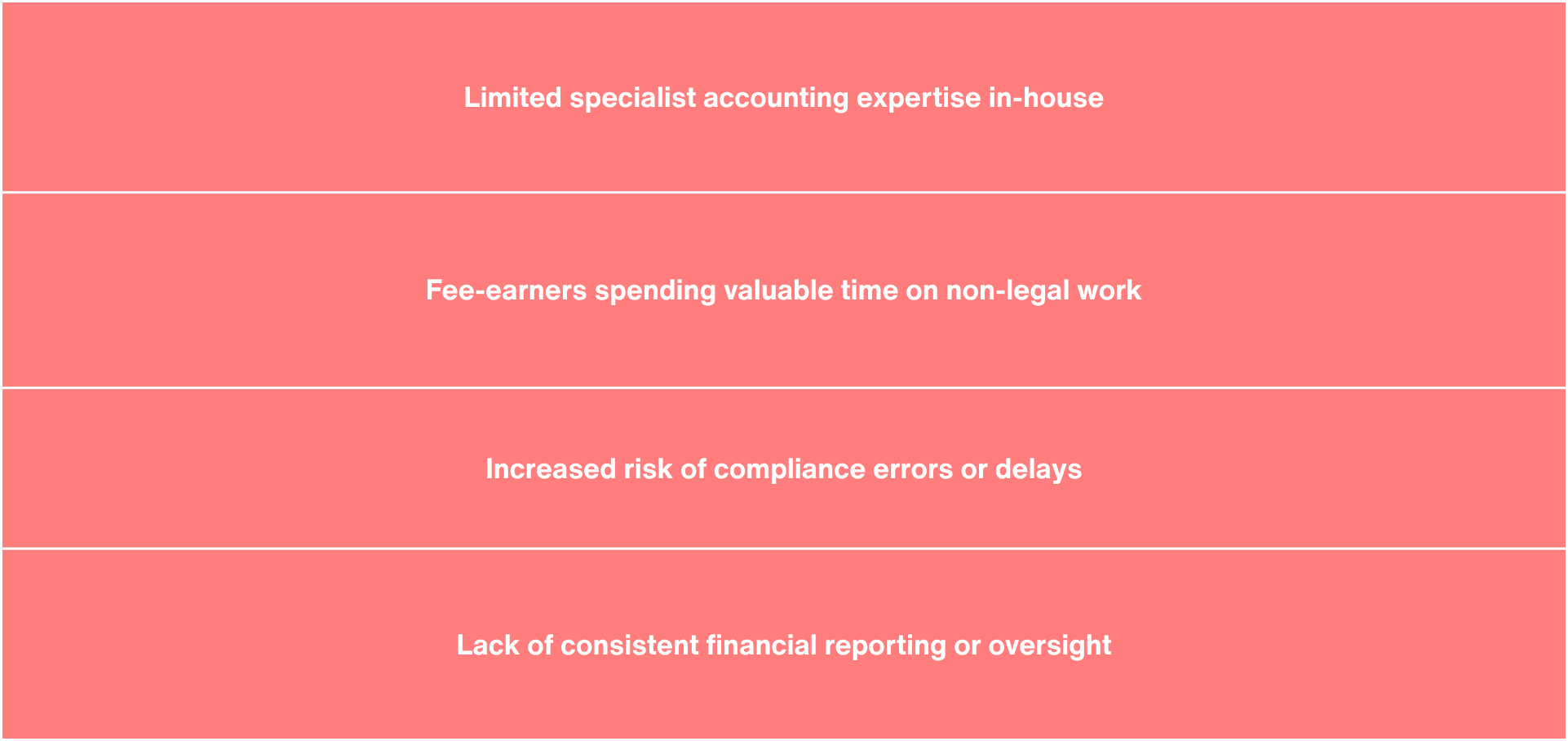
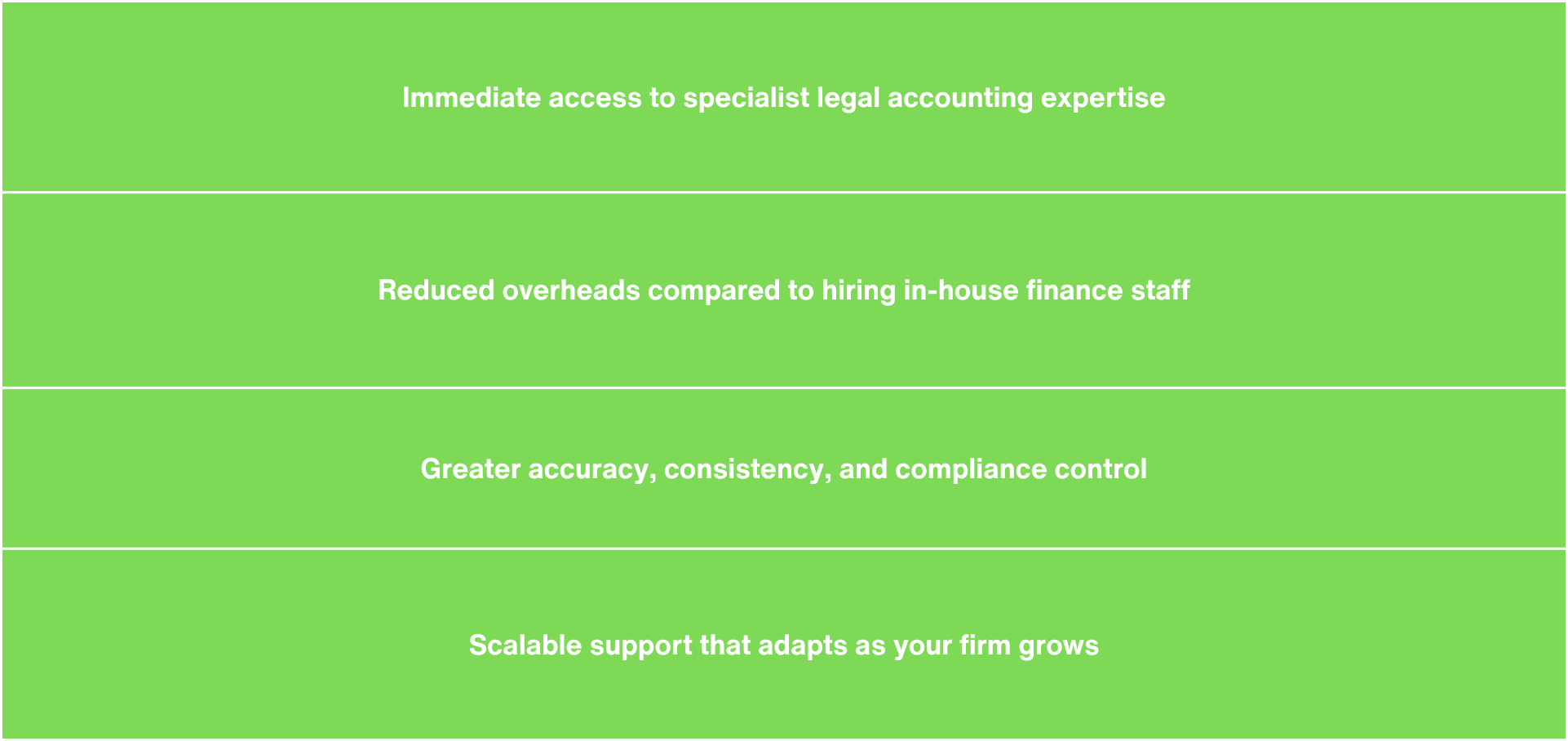
Outsourcing your legal accounting function offers a different approach.
It provides:
Final Thoughts
Choosing the right accountant is one of the most important decisions you’ll make for your firm.
The right partner will:
- Ensure compliance
- Improve financial clarity
- Support your growth
The wrong one can lead to inefficiency, unnecessary risk and avoidable stress.
Taking the time to choose carefully now can make a significant difference to your firm’s long-term success.
Need Support with Legal Accounting?
Cashroom specialises in outsourced accounting services for law firms across the UK, helping firms stay compliant, efficient and financially informed.
“We have used Cashroom for many years, it’s a great system. Our firm is regularly instructed to support significant transactions – both in terms of the importance of deals, as well as their value. As a result, we need to be absolutely sure that we can rely and trust on our finance management partners to be able to administer fast, secure, and seamless transactions. We’ve never thought to look elsewhere as Cashroom have always been there for us.”