

Managing Your Team, Including Difficult People
If you missed Law Firm Ambition’s recent webinar, “Managing Your Team, Including Difficult People”, this blog is inspired and follows the key insights and discussions shared during the session.
In any organisation, teams power everything. Strategy may define direction, but culture determines whether that strategy succeeds. In law firms particularly, where success depends on collaboration, trust and high performance, poor management can quickly undermine even the best business plans.
Yet managing people is often the most challenging aspect of running a legal practice. It requires a balance of leadership, communication, accountability and empathy. When that balance is missing, the result can be unhappy teams, declining productivity and ultimately higher staff turnover.
The Cost of Unhappy and Unproductive Teams
Unhappy teams rarely appear overnight. Instead, issues tend to develop gradually through a combination of unclear expectations, poor communication, lack of accountability or unresolved conflict.
When these issues are not addressed early, the consequences can be significant. High-performing individuals may become disengaged if they feel standards are inconsistent or problems are ignored. Team dynamics can deteriorate, and productivity often falls.
Staff turnover is another major risk. Replacing employees in the legal sector is expensive and time-consuming. Recruitment fees, training costs, onboarding time and the loss of institutional knowledge all contribute to the true cost of replacing someone. In addition, the impact on existing team members, who may need to absorb additional work while a replacement is found, can further affect morale.
This is why effective leadership matters. There is a widely recognised truth in management that people rarely leave jobs, they leave their manager. When individuals feel unsupported, misunderstood or unfairly treated, they are far more likely to look elsewhere.
The People Issues Managers Face Most Often
Managers across law firms consistently report that a significant portion of their time is spent dealing with people-related challenges. Polling during the recent Law Firm Ambition webinar, highlights several key areas that dominate leadership time:
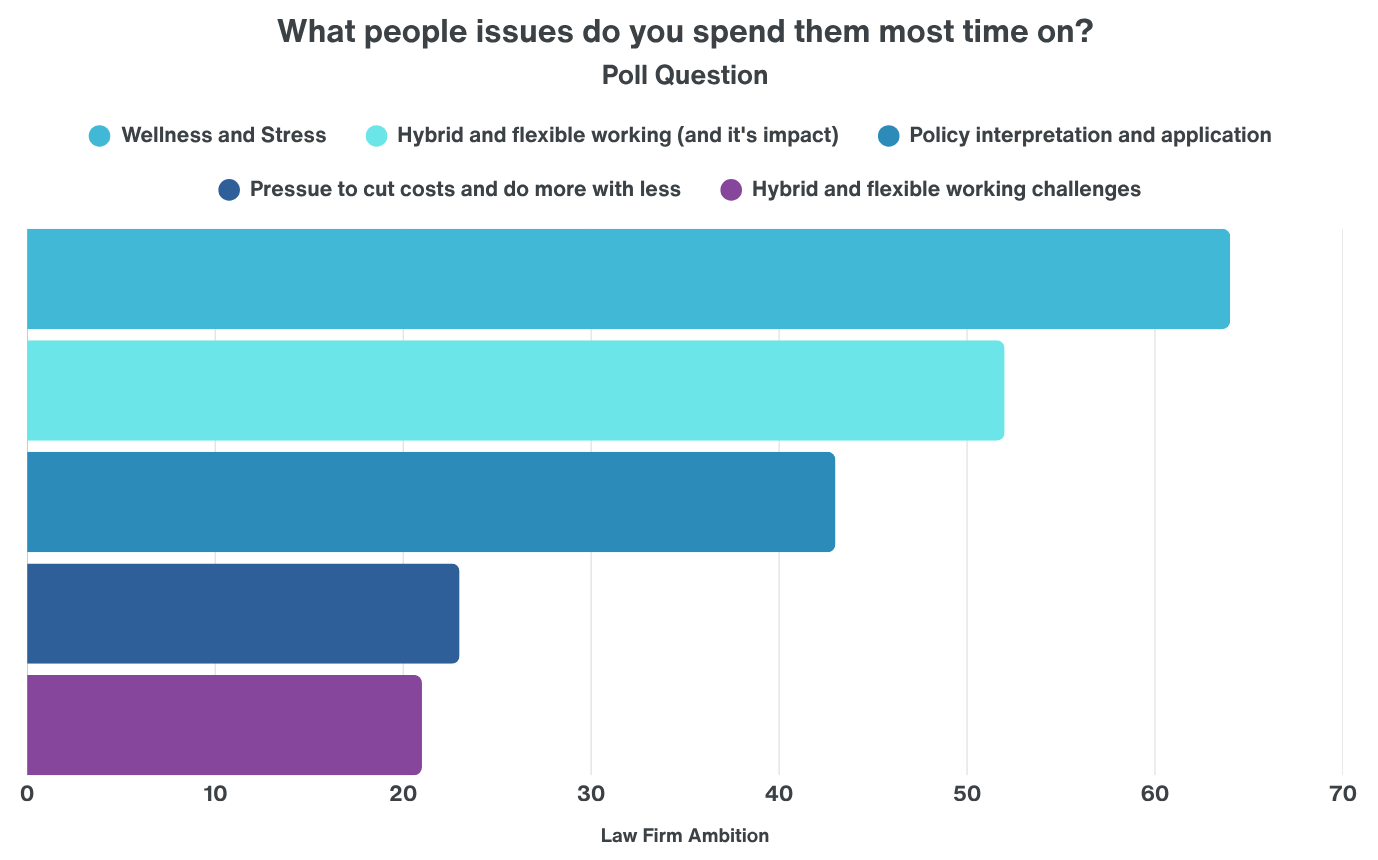
Performance management and wellbeing were the most common issues, and they are often closely connected. When someone is struggling with their workload or performance expectations, stress levels can increase. Equally, external pressures or personal circumstances can affect an individual’s ability to perform at work.
Recognising the connection between these factors is important. Addressing performance issues without understanding the wider context can lead to misunderstandings, while focusing solely on wellbeing without addressing accountability can also create problems within a team. The key is to address issues early and constructively.
Recognising the Early Warning Signs
Performance problems rarely begin with major mistakes or obvious failures. In most cases, the earliest indicators are subtle behavioural changes.
Managers should be alert to patterns such as:
- Increasing inconsistency in work quality
- Missed or delayed deadlines
- Reduced engagement in meetings or discussions
- Withdrawal from colleagues or team activities
- Minor disagreements or tension within the team
- A noticeable drop in motivation or enthusiasm
Individually, these behaviours may not appear significant. However, when they occur repeatedly, they may signal a deeper issue. Early intervention is critical. The goal is not to “catch someone out” but to identify potential problems early enough to reset expectations and provide support where needed. Approaching these conversations in the right way can make a significant difference.
Starting the Conversation Early
One of the most common mistakes managers make is waiting too long before addressing issues. Leaders can often hope that problems will resolve themselves or worry that raising concerns may damage relationships. In reality, avoiding conversations usually allows issues to escalate. When concerns arise, managers should focus on understanding rather than accusing. Open questions can help uncover underlying causes:
“I’ve noticed a few deadlines have slipped recently. Is there anything affecting your workload?”
“You seem quieter in meetings than usual. Is everything okay?”
“Are there any challenges with the current priorities we should discuss?”
These conversations shouldn’t feel like an interrogation or an attempt to build a disciplinary case. Instead, they should focus on exploring what is happening and clarifying expectations. Managers should also avoid relying on rumours or informal commentary from others. Listening to whispers within the team can quickly create a “herd mentality” where assumptions replace facts. Trust is built through direct communication.
Clarifying Expectations and Addressing Misalignment
A surprisingly common cause of performance issues is simple misalignment. Employees may not always be clear about what is expected of them, particularly in fast-paced environments where priorities shift frequently. For example, a fee earner may believe they are focusing on the most valuable work, while their manager may expect them to prioritise different matters or clients. Without clear communication, both individuals can become frustrated.
Managers should therefore ensure that expectations are explicit. During conversations, it can be helpful to summarise key points and play them back to the individual:
- What outcomes are expected
- What priorities should be focused on
- What support may be required
Documenting these discussions is also important. A written record ensures clarity for both parties and provides a reference point for future conversations.
Follow-up meetings should then be scheduled to review progress. Some individuals require more regular check-ins than others, particularly if they are adjusting to new responsibilities or systems.
When Performance and Stress Intersect
A common scenario in performance management arises when individuals raise concerns about stress once performance discussions begin. In many organisations, a significant proportion of formal performance processes involve employees reporting stress or providing medical notes. While wellbeing should always be taken seriously, it is important for employers to maintain appropriate oversight. Supporting employees does not mean relinquishing responsibility for managing performance.
Employers can request medical reports from a GP or occupational health specialist to understand the diagnosis and any recommended workplace adjustments. This helps ensure that decisions are informed and fair.
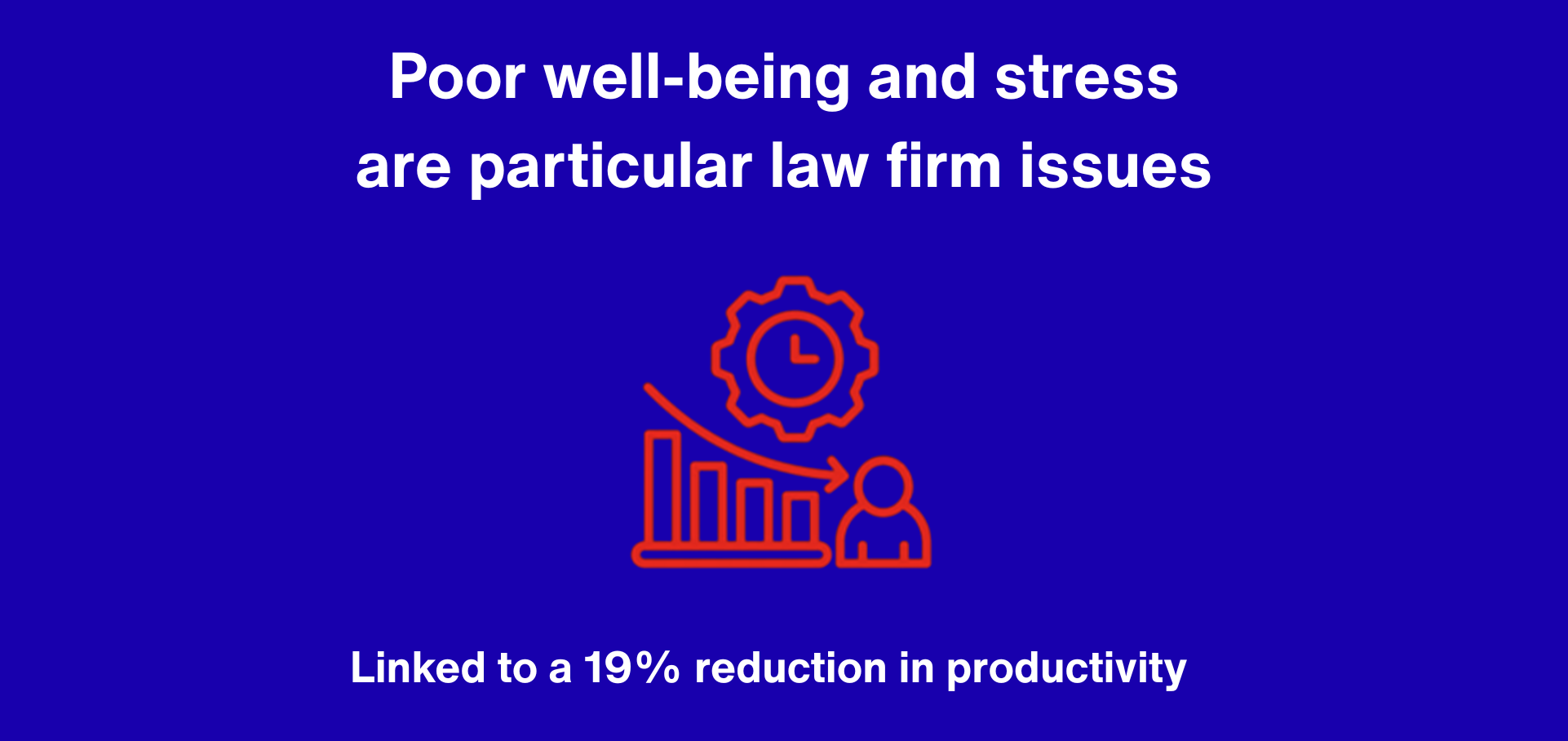
At the same time, managers should continue to engage constructively with the employee, maintaining a balance between care and accountability. Leadership involves ensuring that individuals are supported while also ensuring the organisation continues to operate effectively.
Creating a Culture of Accountability
Strong teams require both trust and accountability. Team leaders play a critical role in creating an environment where individuals understand their responsibilities and feel ownership over their work. This begins with clarity around targets and expectations. In law firms, for example, fee targets can often feel abstract or overwhelming. Breaking them down into smaller, tangible components can make them more manageable.
For instance:
- How many matters are required to reach the target?
- What is the average value of each matter?
- How does monthly performance contribute to the annual goal?
When individuals understand how their daily work contributes to broader business objectives, they are more likely to remain motivated and focused. Managers should also involve their teams in discussions about priorities and workload. When people understand why certain decisions are made, they are more likely to support them.
Changing the Conditions for Better Performance
Sometimes the root cause of performance issues lies not with individuals but with the systems or processes surrounding them.
For example:
- Deadlines may not be clearly communicated.
- Workloads may exceed realistic capacity.
- New systems or software may not have been fully explained.
In these situations, simply asking people to work harder will not solve the problem. Instead, leaders may need to adjust the working environment. This could involve slowing processes temporarily to reset expectations, improving communication around priorities, or providing additional training.
Managers should also be careful not to become the default problem-solver for every issue. When leaders constantly step in to fix problems themselves, they can unintentionally discourage initiative within the team. Instead, asking team members what they believe the solution might be can help build confidence and encourage ownership.
The Role of Regular One-to-One Meetings
One of the simplest yet most powerful management tools is the regular one-to-one meeting. Unfortunately, these meetings are often the first to be cancelled when workloads increase. Managers may feel that because they spoke to someone the day before, a formal check-in is unnecessary. However, structured one-to-one meetings provide an opportunity for deeper discussion. They allow space to review progress, address challenges and provide feedback in a more thoughtful way.
Feedback should never be reserved only for formal reviews or disciplinary processes. When given regularly and constructively, it helps individuals grow and strengthens trust within the team.
Managing Across Different Levels of Seniority
People challenges arise at every level of a firm, but the nature of those challenges can vary depending on seniority. Managing junior employees often involves building confidence, providing guidance and helping them develop professional skills.
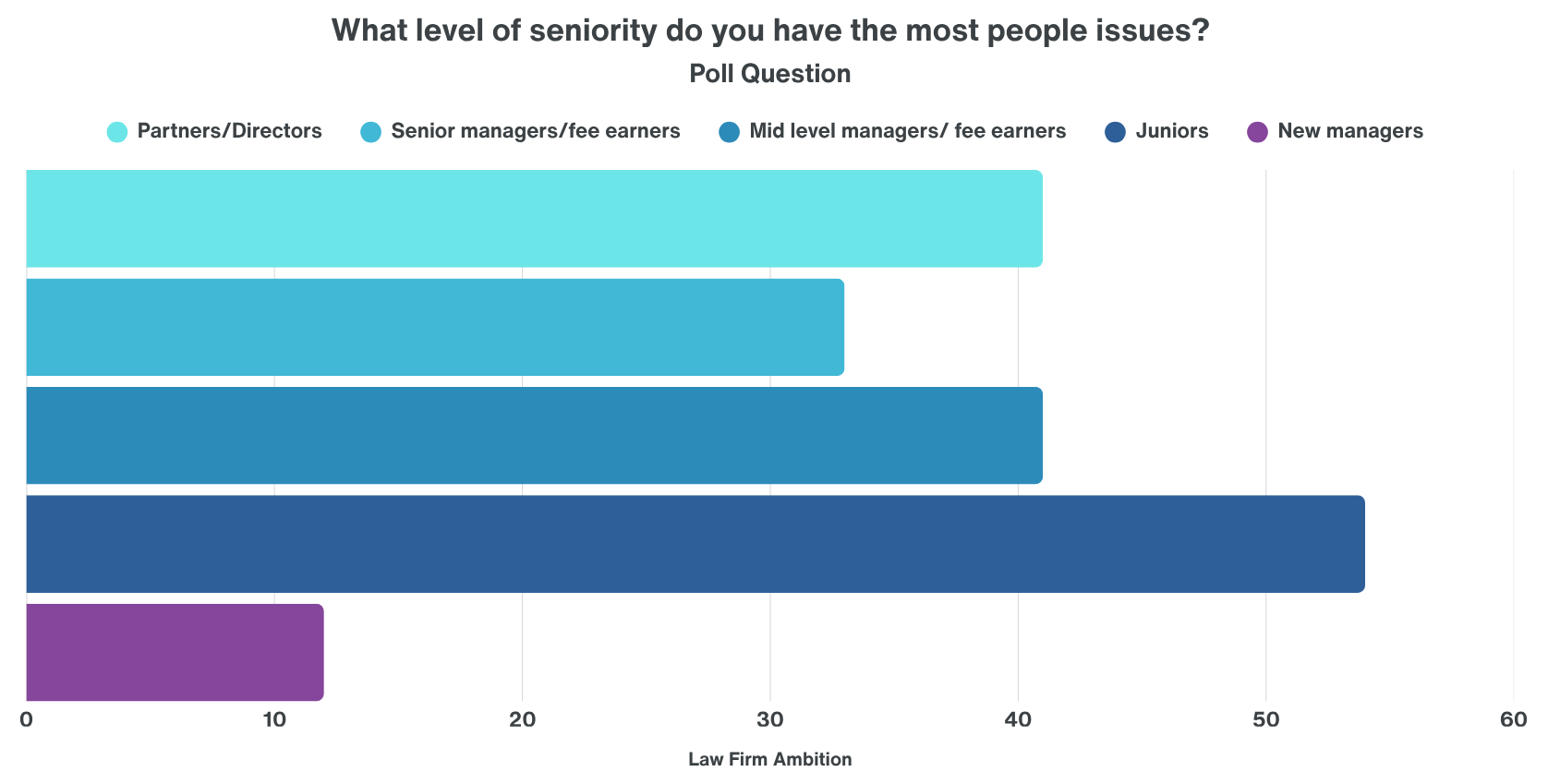
Managing more senior professionals, however, can present different complexities. A senior fee earner or partner may view themselves as an equal to the person managing them, which can create tension when feedback is required. In some cases, individuals who generate significant revenue may feel less inclined to engage with management processes. Conversations can therefore feel more personal or sensitive.
However, senior individuals also have a powerful influence on culture. Their behaviour sets the tone for the rest of the organisation. If senior leaders demonstrate professionalism, accountability and openness to feedback, others are far more likely to follow their example. Tools such as 360-degree feedback can help senior professionals gain insight into how their behaviour affects colleagues and the wider business.
Supporting and Developing Managers
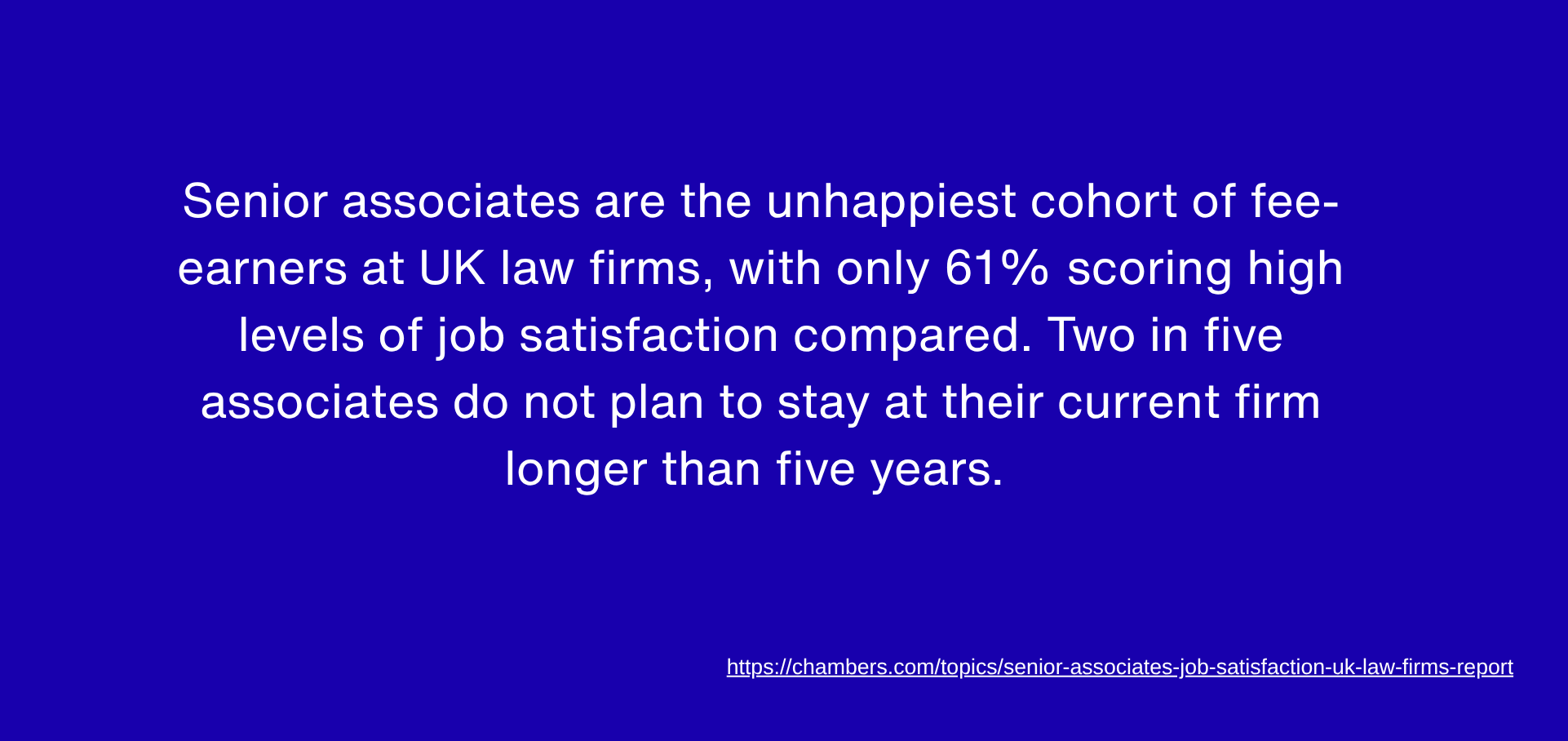
Another important consideration is the capability of managers themselves. In many law firms, individuals are promoted into management roles because of their technical expertise rather than their leadership ability. Being an excellent lawyer does not automatically mean someone will be an effective manager.
Without training or support, new managers may struggle to navigate team dynamics, address performance issues or handle difficult conversations. Developing strong managers requires deliberate investment. This may include:
- Leadership training programmes
- Practical management toolkits
- Coaching or mentoring
- Peer learning groups or coaching circles
Importantly, training should not be treated as a one-off exercise. Managers need opportunities to apply what they have learned, reflect on their experiences and continue developing their skills.
The Challenge of Difficult Conversations
Difficult conversations are one of the most challenging aspects of leadership. Many managers delay them because they fear confrontation or worry about losing staff. However, avoiding these conversations often allows problems to grow. Addressing issues early usually leads to better outcomes for both the individual and the team.
Some practical techniques include:
- Giving the individual advance notice that the conversation may be challenging
- Providing specific examples rather than general criticism
- Demonstrating empathy and understanding
- Focusing on solutions and improvement rather than blame
When handled well, even difficult conversations can strengthen relationships and clarify expectations.
Managing Conflict Constructively
Conflict is often viewed negatively, but it is not always harmful. Healthy disagreement can lead to better ideas and improved decision-making. The real challenge arises when conflict becomes personal or unresolved. In these situations, external mediation can be extremely helpful.
Workplace mediators provide a neutral environment where individuals can explain their perspectives and feel heard. The focus is not on deciding who is right or wrong but on understanding what has happened and identifying constructive ways to move forward. When people feel genuinely listened to, it can significantly reduce tension and restore working relationships.
Building a Positive Team Culture
Strong team culture is built through consistent leadership behaviours. Managers should focus on:
- Encouraging open communication
- Ensuring everyone has an opportunity to contribute
- Addressing problems early rather than ignoring them
- Modelling the behaviours they expect from others
- Recognising the contributions of team members
Body language, tone of voice and face-to-face communication also play an important role. While email has its place, many sensitive discussions are better handled in person or via phone or video, where tone and intention can be communicated more clearly.
Generational differences and evolving expectations around work also require thoughtful leadership. Transparency, flexibility and clear behavioural standards can help teams navigate these changes effectively. As leadership specialist Joanna Gaudoin has noted, the goal is to make your team an asset rather than a burden.
Final Thoughts
Managing people will always be complex. Every team is made up of individuals with different personalities, motivations and challenges. However, strong leadership practices, including clear communication, early intervention, regular feedback and investment in management capability, can significantly reduce the impact of difficult situations.
By creating a culture where expectations are clear, conversations are open and accountability is shared, law firms can build engaged teams that support both individual development and long-term business success.
Special thanks to Law Firm Ambition for this insightful webinar hosted by Andy Poole, with speakers Helen Kirk-Blythe, Helen Manson, Joanna Gaudoin and Sophie Wardell for another informative session.

Interested in a confidential chat?
If you are considering outsourcing your legal cashiering, or just want to find out how it works, our team is here to help.
“We have been working with The Cashroom for the past eight years and it has been a fantastic relationship throughout. We use Cashroom for their expertise in legal cashiering, management accounts, payroll and VAT returns, and consistently receive a reliable, high quality service. Their team works brilliantly alongside our in-house team and delivers a secure, efficient and compliant finance function that supports our business as it continues to grow. Their flexible services, combined with a genuine personal touch, mean we have a finance function that fits our needs perfectly. Their processes work particularly well for our busy conveyancing team, helping us operate efficiently while maintaining the high standards our clients expect.”